
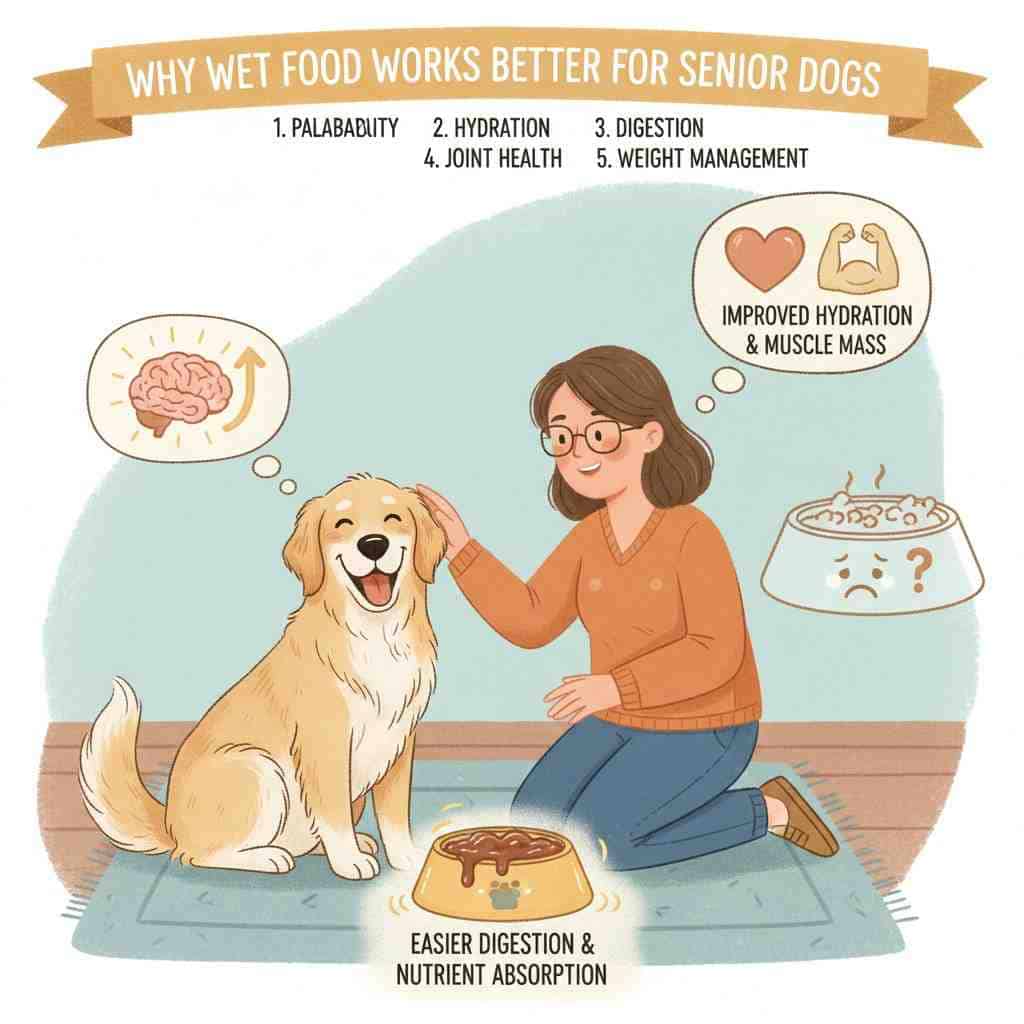
In this post we gonna explore why wet dog food work better for senior dogs health and happiness.
Have you ever noticed your old furry friend slowing down at mealtime or showing less interest in food?
As dogs age their energy, appetite and even sense of taste start to change.
This is where wet dog food can make a big difference for senior dogs.
Older dogs commonly face challenges like weaker teeth, sensitive gums and digestive issues making it hard for them to enjoy the dry kibble they once loved.
Wet food gives a softer texture, richer aroma, higher moisture content that helping your senior companion eat comfortably while staying hydrated and nourished.
Whether your goal is to boost their appetite, support better digestion or simply make mealtime more enjoyable understanding the benefits of wet food will help you make the right decision for your loyal friend’s golden years.
1: Understanding the Changing Needs of Senior Dogs
before understand why wet food works better for senior dogs we have to find out what are the problems they are facing .
Have you noticed your senior dog slowing down or eating less, chewing more carefully or losing interest in their favorite meals?
These changes are common as dogs age and often mean their diet needs to change too.
As dogs grow older their bodies go through natural shifts that affect how they eat and digest food.
Here’s what many owners notice:
1.Dental issues – Weaker teeth or sore gums make crunchy kibble hard to chew.
2.Lower appetite – Aging can reduce the sense of smell and taste, leading to picky eating.
3.Hydration problems – Senior dogs may drink less water, increasing the risk of dehydration.
4.Slower digestion – Older stomachs process food differently and need gentler options
That’s where wet dog food helps. It’s soft texture, rich aroma, and moisture rich recipe make eating comfortable and enjoyable again. When you understand what your aging pet truly needs you can give them the nutrition and care they deserve in their golden years.
2: The Key Benefits of Wet Food for Senior Dogs
So what makes wet dog food for senior dogs stand out from dry kibble? The answer lies in its texture, taste, and nutrition. Each spoonful is designed to make eating easy and satisfying—especially for older dogs who struggle with hard or dry foods.
Here are some standout benefits:
1. Easier to chew and swallow – Perfect for dogs with weak teeth or sensitive gums.
2. Better hydration – The high moisture content keeps your senior dog hydrated without extra effort.
3. Gentle on digestion – Soft food moves easily through the stomach and supports smoother digestion.
4. More appealing taste and smell – Great for picky eaters who’ve lost interest in dry food.
Every bite of wet food offers comfort, flavor, and nutrition—helping your furry friend enjoy mealtime again.
3: Nutritional Advantages of Wet Food
When it comes to nutrition, wet dog food provides an edge that many senior dogs benefit from. It’s not just softer—it’s packed with the right balance of proteins, fats, and vitamins that aging dogs need to stay strong and healthy.
1.Here’s how it supports their well-being:High-quality protein helps maintain muscle mass and strength.
2. Healthy fats give sustained energy without overloading calories.
3. Added vitamins and minerals strengthen immunity and joint health.
4. Fewer fillers and artificial ingredients mean cleaner nutrition.
Choosing wet food ensures that every bite counts—especially when your dog’s body needs nutrient-rich meals to stay active and comfortable
4: How Wet Food Supports Specific Senior Health Issues
Older dogs often face health challenges that require extra attention. The right wet dog food for senior dogs can make managing these issues easier while keeping your pet comfortable and happy.
Here’s how it helps with common age-related concerns:
1. Dental or gum problems : Soft food is painless to chew, reducing stress during meals.
2. Kidney and urinary issues : The extra moisture supports healthy kidney function and flushes toxins.
3. Weight management : Properly portioned wet food helps prevent unwanted weight gain.
4. Joint and mobility support : Nutrient-rich recipes with omega fatty acids and glucosamine can ease stiffness.
By tailoring their diet to their needs, you’re not just feeding your dog—you’re supporting their comfort and extending their quality of life.
5: Tips for Switching Your Senior Dog to Wet Food
Thinking about switching to wet dog food? The process is simple, but it’s best done gradually to keep your dog’s tummy happy. A sudden change can cause stomach upset, so patience pays off.
Follow these easy steps:
1. Start slow: Mix a small amount of wet food with your dog’s current food.
2. Increase gradually: Add more wet food over 7–10 days.
3. Watch digestion: Keep an eye out for any stomach discomfort.
4. Monitor energy levels: A healthy transition should boost appetite and enthusiasm.
Pro Tip: Always talk to your vet before making major diet changes. They can help you choose the right formula and portion size based on your dog’s age and health
For step by step guide, check out our detaied post on How do i swich my senior dog to wet food safely? – it walks you through the safest and smoothest way to make the change.
6: Choosing the Right Wet Food for Your Older Dog
Not all wet dog food for senior dogs is created equal. Picking the right one ensures your pet gets both taste and nutrition in every bite.
Here’s what to look for when shopping:
1. Quality ingredients :Real meat, vegetables, and healthy grains.
2. Age-appropriate formulas: Designed specifically for senior dogs.
3. Reputable brands : Trusted by vets and backed by positive reviews.
4. No artificial preservatives or excess salt.
By choosing carefully, you’ll find a recipe that suits your dog’s needs and supports their long-term health.
7: Maintaining a Healthy Feeding Routine
Feeding your senior dog the right food is only half the journey—how you feed them matters too.
Consistency and care make a big difference in their daily comfort and well-being.
Here are some smart habits to follow:
1. Stick to regular mealtimes to keep digestion steady.
2. Serve food at room temperature to enhance taste and smell.
3. Store leftovers properly to maintain freshness.
4. Observe changes in appetite, weight, or mood regularly.
Adjust their diet as needed, and always listen to what your dog’s behavior tells you. A little extra attention at mealtime can make a huge difference in how they feel each day.
Conclusion: Helping Your Senior Dog Thrive with the Right Food
Your loyal companion has been by your side for years, offering love, joy, and endless memories. As they grow older, they deserve the same care and attention they’ve always given you — starting with their diet. Choosing wet dog food for senior dogs isn’t just about changing what’s in their bowl; it’s about giving them comfort, nourishment, and a better quality of life.
Wet food’s soft texture, rich flavor, and hydration benefits make it easier for older dogs to eat and enjoy every bite. It supports their digestion, dental health, and overall energy — helping them stay active and happy through their golden years.
Every senior dog is unique, and the best results come from understanding your pet’s specific needs. Take your time, observe their response to new meals, and consult your vet when needed. With the right wet dog food and a little love, you can make every mealtime a moment of joy and care — because your best friend deserves nothing less.
FAQ: Wet Dog Food for Senior Dogs
1. Why should I switch my senior dog to wet food?
Wet food is softer and easier to chew and more flavorful these things making mealtime enjoyable for dogs with dental issues or reduced appetite. It’s higher moisture content also helps keep your senior dog hydrated.
2. How do I transition my senior dog from dry to wet food?
Start by mixing a small amount of wet food with their current food, gradually increasing the ratio over 7–10 days. Monitor your dog for any digestive changes and adjust as needed.
3. Can wet dog food help with my dog’s digestion?
Yes. Wet food is generally easier to digest than dry kibble thats helping senior dogs with sensitive stomachs absorb nutrients more efficiently.
4. What should I look for when choosing wet food for my older dog?
Look for formulas designed for senior dogs with high quality proteins, essential vitamins, minerals and minimal fillers or artificial additives. Always choose reputable brands and consult your vet if unsure.
5. How often should I feed my senior dog wet food?
Most senior dogs do well with 2–3 meals per day depending on their size, health and activity level. Consistent feeding times help maintain healthy digestion and energy levels
Pingback: How to Choose the Best Wet Dog Food for Senior Dogs