
After dogs get older like us, their bodies start to change. They start to eat less food and walk slowly, and their teeth get weaker, so they struggle to eat this thing make them so weak.
That’s why we all choose the best food for our buddies. For senior dogs wet dog food is a very good option.
Finding the right wet dog food is not the only thing that is important; you should know how much wet dog food you should feed your senior dogs.
Feeding them the right amount helps them stay strong and be happy and healthy.
Understanding What your senior Dogs Need
Just like us, dogs face problems like physical and metabolic changes as they age.
Their bodies start to burn calories more slowly, their muscles get weaker, and their digestion starts to get poor.
So they need food to solve these problems.
When Is a Dog Considered “Senior dog”?
The age a dog becomes a senior depends mostly on breed and size.
Giant breeds:
Like Great Danes and Mastiffs, consider them seniors.
around 7 years old
Large breeds:
Like Labradors and Golden Retrievers, they are considered seniors around 8 years old.
Medium breeds:
like Beagles and Border Collies, are considered seniors around 10 years old.
Small breeds:
Like Chihuahuas and Toy Poodles, they are considered senior around 11–12 years.
Common Age-Related Health Issues
These are the problems senior dogs commonly face.
- Joint and mobility problems
- Dental and gum issues
- Weight gain or loss
- Heart disease
- Digestive troubles
- Vision and hearing loss
- Weak immune system
- Kidney or liver problems
Why Wet Food Can Be a Great Choice for Older Dogs
Wet food gives many benefits for older dogs.
Tastier and More Aromatic
Some senior dogs lose their appetite or sense of smell. Wet food tends to have a stronger aroma and softer texture, making it much more tempting to picky eaters.
Boosts Hydration
Since wet food contains a high percentage of water, it helps older dogs stay hydrated—especially if they don’t drink as much as they used to.
Packed with Nutrition
Quality wet foods are rich in protein and essential nutrients with fewer fillers. Many senior formulas also include helpful ingredients like
- Glucosamine and chondroitin for joint support
- Antioxidants to boost immunity
- Omega fatty acids for skin and coat health
Easier on the Teeth
Dogs with dental issues often find wet food easier to chew and swallow, ensuring they still get balanced nutrition without discomfort.
If you combine wet and dry food, reduce the portion of each so your dog doesn’t overeat. A good rule is for every 1 cup of wet food added, cut about ⅓ cup of dry food.
Keep an Eye on Weight
Weigh your dog monthly and adjust portions if you notice changes. If your dog gains or loses weight unexpectedly, consult your vet for guidance.
Why It’s Important to Feed Your Dog the Right Amount
Feeding your dog the right amount of food is very important to keep them healthy and happy. If you give your dog too little food, they might become weak and too skinny. But if you give too much, they can get overweight and have sore joints or heart problems.
The right amountof food helps your dog stay strong, full of energy, and at a healthy weight. Every dog is different—big dogs, small dogs, young ones, and older ones all need different amounts of food. Always look at the feeding guide on the food packet, and if you’re not sure, ask your vet for help.
How Much Wet Food to Feed Your Senior Dog
The right portion depend on your dog’s weight,age, and activity level. Feeding too much can cause weight gain, If they eat too little, they might look skinny.
General Rule of Thumb
A simple guideline is to feed your dog around 2% of their body weight in food per day.
For example:
A 50-pound senior dog would need roughly 1 pound (16 ounces) of food each day.
Check the Feeding Chart.
Every can or pouch of wet food has feeding instructions. You should always read that first.
but here’s a general example of what many wet food brands recommend:
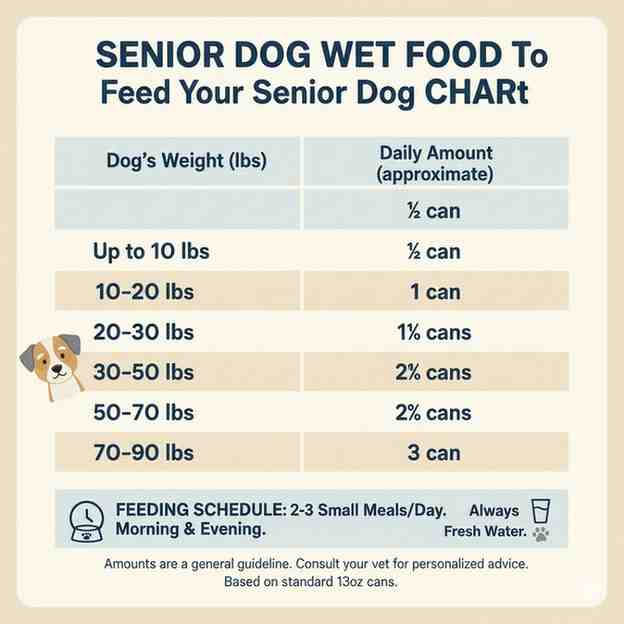
Use these as a starting point, then adjust based on your dog’s activity level, body condition, and vet’s advice.
How Many Times a Day Should I Feed My Senior Dog?
Older dogs (senior dogs) usually do best when they eat two small meals every day—one in the morning and one in the evening. This helps them keep their energy up and avoids tummyproblems.
Some older dogs might need three small meals a day, especially if they have health issues. Small, frequent meals are easier to chew and digest. If your dog has trouble chewing, wet food or soft food is a great choice. Always make sure your dog has clean water to drink.
Helpful Tips:
- Feed your dog at the same times every day—dogs love having a routine!
- Give your dog fresh water with every meal.
- Don’t feed your dog right before playtime or bedtime. It can make their tummy hurt.
- Feeding your dog the right way keeps them healthy, happy, and full of love for many years!
How to find You’re Feeding the Right Amount
Here are signs that show you’re feeding your senior dog just the right amount:
- They have a healthy weight – not too fat, not too thin.
- They finish their meals but don’t act super hungry.
- Their coat is shiny and skin looks good.
- They have good energy for walks and playtime.
- Their poop looks normal – not too soft or too hard.
If something seems wrong like they’re tired, losing weight or not eating take them to the vet for a check-up.
Making Mealtime More Enjoyable
Older dogs deserve comfort and care during meals. Try these simple adjustments to improve their feeding experience:
- Serve food at room temperature. If refrigerated, let it sit for a few minutes or warm it gently (never hot).
- Use a raised feeding bowl. It’s easier on joints and necks, especially for large or arthritic dogs.
- Offer smaller, more frequent meals. Three light meals are often easier to digest than one or two large ones.
- Provide fresh water at all times. Keep bowls in easy-to-reach places if your dog has mobility issues.
- Watch for changes. Loss of appetite, difficulty chewing, or sudden fussiness could indicate a health problem.
Final Thoughts
Feeding your senior dog the right amount of wet food is one of the simplest ways to support their health in their golden years. By understanding their nutritional needs, choosing nutrient-rich wet food, and adjusting portions carefully, you can help them stay active and content.
At Houndsy, we’re passionate about making mealtime both easy and enjoyable. Our beautifully designed Houndsy Kibble Dispenser brings style and convenience to feeding time—no mess, no bending, and perfect portions every time.
Your loyal companion has given you years of love. Giving them proper nutrition and a pleasant mealtime experience is the best way to return that love—one bowl at a time.
Tip: Always check with your vet before making big changes to your senior dog’s diet. Every dog is different — what works for one might not work for another.
Frequently Asked Questions (FAQ)
Can I mix wet and dry food for my older dog?
Yes! Mixing wet and dry food is a great idea. It gives your dog extra flavor, more texture, and helps keep their teeth cleaner. Just make sure the total amount doesn’t go over your dog’s daily calorie needs.
Is Wet Food Better Than Dry Food for old Dogs?
Wet food is often better for senior dogs because it’s soft, easier to chew, and keeps them hydrated. It’s especially good for dogs with dental problems or those who don’t drink much water. Some owners mix both types for balance.
What happens if my senior dog eats too much wet food?
If your dog eats too much, they can gain weight and become lazy or tired. This can lead to health problems like joint pain or heart issues. Always measure your dog’s food and follow the feeding guide on the can.
How can I make wet food more appealing to my senior dog?
Try warming the food slightly to release aroma, or mix it with a spoonful of broth. Serving it at room temperature and offering meals in a calm, comfortable spot can also make a big difference.